

In today's digital landscape, users are inundated with a multitude of interfaces vying for their attention. While aesthetics and functionality are paramount, the true differentiator lies in the subtle art of UX writing. It's not merely about instructing users on what to do next; it's about crafting an experience where every word resonates with empathy, clarity, and purpose. Effective UX writing transforms mundane interactions into meaningful engagements, guiding users seamlessly through their journey without overt persuasion.
This article delves into the nuances of UX writing, exploring how thoughtfully chosen words can enhance user experience, build trust, and drive conversions. We'll examine the principles of empathetic design, the power of storytelling, and the importance of strategic content planning. By the end, you'll understand how to create interfaces that not only function well but also connect with users on a deeper level, making every interaction feel intuitive and intentional.
Lead with Understanding, Design with Intent
Before diving into design, it's crucial to understand the user. Empathy forms the foundation of effective UX.
How Empathy Shapes the Foundation of a UX That Connects and Converts
Marketers and CX leaders aren’t just dealing with interfaces; they’re dealing with people juggling campaigns, budget pressures, and KPIs. When your website or app resonates with their reality, conversion becomes natural.
Practical Approach:
- Conduct 10-minute interviews with real users, digging into their frustrations with current tools.
- Build a compact persona: “Maria, digital marketer, spending 3+ hours daily on campaign reports.” Use her language, “I’m drowning in data,” in UI text and onboarding screens.
Empathy isn’t fluff; it’s strategic alignment that turns browsers into buyers.
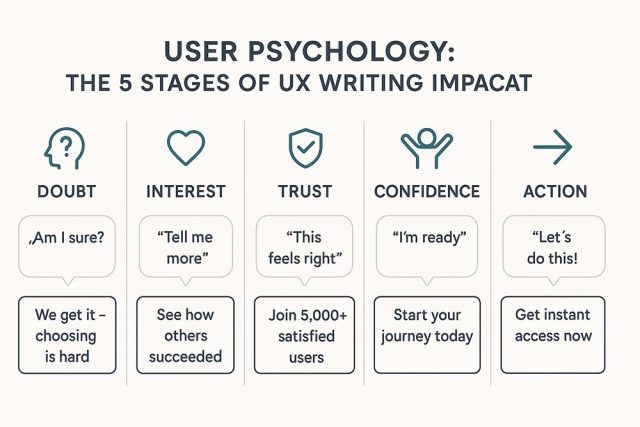
Speak to People, Not Pipelines
Your users are humans, not data points. Communicate with them directly and personally.
Techniques for Crafting Copy That Feels Human and Credible
Speak in your user’s voice: short, direct sentences with “you.” For example:
“Tired of chasing down metrics? See them all in one dashboard.”
Notice how “you” takes center stage, clearly stating the value.
Pro Tip: Read all microcopy out loud. If it doesn’t sound like a colleague, rewrite it. This is core to UX-driven digital marketing.
Create a Journey, Not a Sales Funnel
Guide your users through a seamless experience that feels natural and supportive.
How to Build a User Flow That Feels Supportive, Not Transactional
Think of your UX as a guided journey:
- At signup, ask a question that shows empathy:
“What’s your top challenge: tracking ROI or automating reports?”
- Frame onboarding as a conversation, not a chore.
- Introduce soft nudges:
“Learn how other brands improved reporting by 50%,” instead of a “Buy now” button.
This gentle design creates room for users to discover value at their own pace, reinforcing permission-based engagement.
Illuminate Through Real Stories
People connect with stories. Use them to humanize your brand and build trust.
The Power of Narrative in UX-Driven Marketing
Tell a brief customer story:
“Meet Alex, a marketing lead frustrated by fragmented dashboards. After implementing our workflow, she regained 10 hours per week and saw a 25% uplift in campaign clarity.”
Micro-stories like this spark identification and illustrate change organically, without aggressive selling.
Be Intentional, Plan Content That Guides
Strategic planning ensures your content serves both user needs and business goals.
A Practical Process for UX Copy Planning
- Finalize your brand voice guide (coach vs. peer).
- Map user journeys: identify touchpoints, education, micro-insight, conversion.
- Prepare backup prompts: FAQs, proactive help texts, hover tips with an empathetic tone.
By designing UX that feels thoughtful, you’re building a marketing asset that’s both informative and persuasive.
Leverage Analytics: Build Smarter, Data-Driven UX
In the realm of UX design, intuition and creativity are invaluable, but they must be complemented by data-driven insights. Analytics provide a clear picture of user behavior, preferences, and pain points, enabling designers to make informed decisions that enhance user experience and drive conversions.
Utilizing Analytics for Informed UX Design
Integrating analytics into the UX design process allows for:
- Identifying User Behavior Patterns: By analyzing user interactions, designers can uncover common pathways, obstacles, and drop-off points, informing design improvements.
- Personalizing User Experiences: Data enables the creation of tailored experiences that resonate with individual user needs and preferences.
- Validating Design Decisions: A/B testing and heatmaps provide empirical evidence to support design choices, reducing the risk of assumptions.
Practical Approach:
- Implement Analytics Tools: Utilize platforms like Google Analytics, Hotjar, or Mixpanel to gather data on user interactions.
- Define Key Metrics: Establish clear KPIs such as conversion rates, bounce rates, and user engagement levels to measure success.
- Analyze and Interpret Data: Regularly review analytics reports to identify trends, anomalies, and areas for improvement.
- Iterate Based on Insights: Use data-driven insights to refine and optimize UX designs, ensuring they align with user expectations and business goals.
Incorporating analytics into the UX design process transforms design from an art into a science. By grounding decisions in data, designers can create user experiences that are not only intuitive and engaging but also effective in achieving desired outcomes.
Conversion Rate Optimization (CRO):
Enhancing User Experience to Drive Conversions
Conversion Rate Optimization (CRO) is the practice of increasing the percentage of visitors to a website who complete a desired action, such as making a purchase, signing up for a newsletter, or downloading a resource. While UX writing focuses on crafting clear, empathetic, and actionable content, CRO involves systematically testing and refining various elements of a website to improve these conversion metrics.
The Intersection of UX Writing and CRO
UX writing plays a pivotal role in CRO by ensuring that the language used throughout the user journey is persuasive, concise, and aligned with user expectations. Well-crafted microcopy can reduce friction, clarify value propositions, and guide users toward desired actions without being overtly sales-driven. For instance, replacing a generic "Submit" button with a more engaging "Get Your Free Guide" can significantly increase click-through rates.
Implementing CRO Strategies
To effectively leverage UX writing within a CRO framework, consider the following strategies:
- A/B Testing: Regularly test different versions of headlines, CTAs, and microcopy to determine which resonates best with your audience.
- User Feedback: Gather insights through surveys, user testing, and analytics to understand pain points and areas for improvement.
- Clear Call-to-Actions: Ensure that CTAs are specific, action-oriented, and aligned with user intent.
- Simplify User Flows: Minimize the number of steps required to complete a conversion, reducing potential drop-off points.
- Responsive Design: Optimize content for various devices, ensuring a seamless experience across platforms.
By aligning UX writing with CRO principles, businesses can create user experiences that are not only intuitive and engaging but also optimized for conversion. This holistic approach ensures that every interaction is purposeful, guiding users effortlessly toward desired actions and ultimately driving business success.
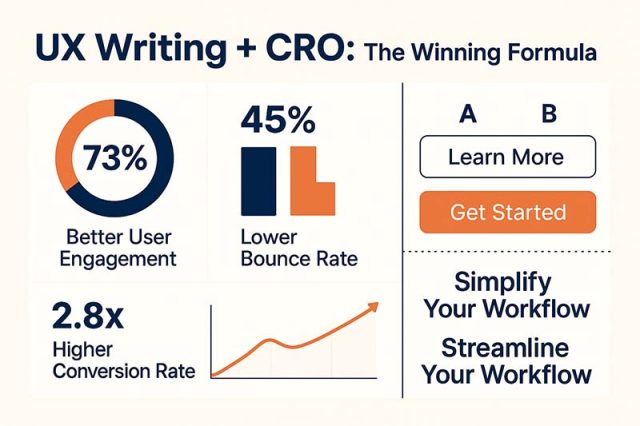
Test, Measure, Adapt, Subtly and Smartly
Continuous improvement is key. Use data and feedback to refine your UX writing.
Real-World Techniques to Refine UX Copy Based on Real Behavior
- A/B test soft CTAs, “See example” vs. “Learn more,” and track engagement.
- Monitor drop-off points: are users bouncing at a step because your prompt feels pushy?
- Combine analytics with quick user feedback sessions.
When your UX evolves based on data, and always leans helpful, it becomes more persuasive without ever seeming salesy.
Why This Blended Approach Works
Combining empathy, clarity, and strategy transforms your UX into a powerful marketing tool.
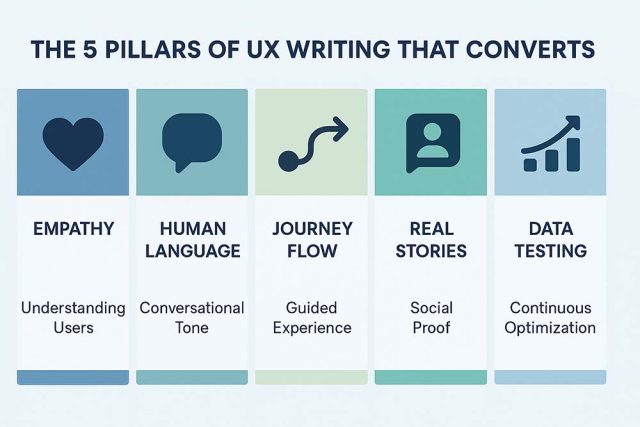
You’re not just marketing; you’re guiding with intelligence. By combining empathy, conversational tone, intentional design, real outcomes, and data-driven iterations, your UX becomes a marketing engine that educates, engages, and converts, all on its own.
This method positions your product as the natural next step in the user’s story, not a sales tangent.
Integrating thoughtful UX writing isn't merely about crafting words; it's about crafting experiences.
By aligning your content with user needs, adopting a conversational tone, and continuously refining through feedback, you transform your interface into a seamless guide that users trust and engage with. This approach not only enhances user satisfaction but also drives meaningful conversions, proving that effective communication is at the heart of every successful digital interaction.
