

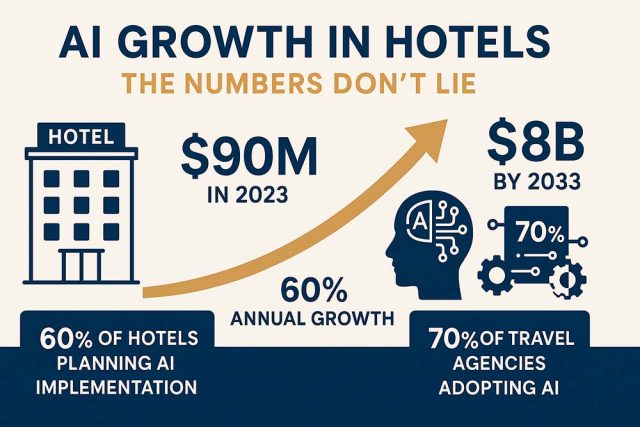
The hospitality industry is at a crossroads. New technology promises unprecedented efficiency and personalization, but can it ever truly replicate the warmth of genuine human connection? The numbers certainly tell a compelling story: AI spending in hotels reached approximately $90 million in 2023, with analysts projecting remarkable 60% annual growth until it reaches around $8 billion by 2033. More than 60% of hotels and nearly 70% of travel agencies are now planning AI implementations.
These figures tell a compelling story of transformation. Yet they also raise the most fundamental and important question in hospitality: while AI will undoubtedly change the industry and the operations, can it provide the smile and the emotional warmth that defines exceptional guest service? This article examines what AI brings to the table, what humans still uniquely offer, and how the two might work together to create a better future of service and hospitality.
The AI Revolution in Hotel Operations
Transforming Back-End Efficiency
Modern AI systems can monitor equipment around the clock, using sensors to detect when a refrigerator shows signs of failure, then automatically scheduling maintenance before guests experience any disruption. Hotels implementing predictive maintenance report significant reductions in emergency repairs, saving both costs and guest satisfaction scores. Property managers consistently identify operational efficiency as AI's primary benefit, with 51% of hotel firms citing increased efficiency as the main way AI will reshape their operations.
The impact extends beyond maintenance. Dynamic pricing algorithms now adjust room rates in real-time based on demand patterns, local events, weather forecasts, and competitor pricing. Revenue management systems powered by AI can optimize not just room rates but also ancillary services – from spa bookings to restaurant reservations – creating a comprehensive approach to profit maximization.
Personalizing the Guest Journey
AI's ability to analyze vast datasets transforms how hotels understand and serve their guests. By processing information from past stays, preference surveys, online behavior, and even social media activity, AI systems can recommend everything from pillow firmness to local attractions that match individual tastes.
The adoption speaks volumes: approximately 80% of hotels now use or plan to implement AI-driven personalization tools. This isn't just about remembering room temperature preferences, it's about creating anticipatory service that feels almost magical to guests. The technology enables hotels to deliver experiences that feel uniquely crafted for each visitor.
Revolutionizing Guest Communication
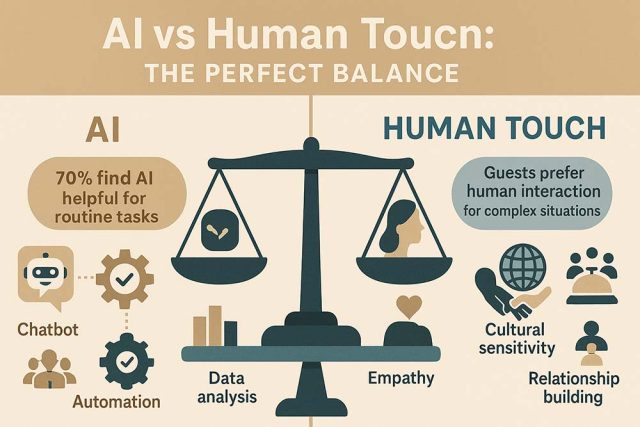
Conversational AI has evolved far beyond simple FAQ responses. Today's chatbots can maintain complex conversations, understand emotional context, and even detect frustration in guest communications. Current data shows 70% of guests find AI assistants helpful for routine tasks like check-in procedures, Wi-Fi access, and wake-up calls.
The technology now handles multiple languages simultaneously, operates 24/7 without fatigue, and learns from each interaction to improve future responses. This automation frees human staff to focus on complex problem-solving and relationship-building while ensuring guests receive immediate assistance for routine needs.
The Irreplaceable Human Element
Emotional Intelligence in Action
Despite AI's impressive capabilities, current technology cannot replicate the nuanced emotional intelligence that defines exceptional hospitality. When a guest approaches the front desk visibly stressed about a delayed flight, an experienced staff member can read body language, hear vocal stress patterns, and respond with exactly the right combination of empathy and practical solutions.
Consider the difference between an AI system acknowledging a complaint with programmed responses versus a skilled hotel manager who notices a guest's anniversary celebration was disrupted, then personally coordinates with housekeeping and dining to create a memorable recovery experience. These moments of genuine care and creative problem-solving remain uniquely human.
Building Authentic Relationships
Human employees excel at creating authentic connections that transform routine transactions into lasting memories. A concierge who remembers a child's favorite cartoon character, a bartender who asks about a regular guest's recent promotion, or a housekeeper who notices and thoughtfully replaces a worn stuffed animal, these personal touches create emotional bonds that drive guest loyalty.
Research consistently shows that while guests appreciate AI efficiency for routine tasks, they strongly prefer human interaction for complex situations, emotional moments, and relationship-building experiences. The most successful properties understand this distinction and deploy each approach strategically.
Cultural Sensitivity and Intuition
International travelers bring diverse cultural expectations and communication styles. A skilled human staff member can recognize subtle cultural cues, understanding when a bow is more appropriate than a handshake, when directness might be appreciated versus when gentle suggestion works better, or how to comfort a guest dealing with a family emergency in their home country.
Even the most sophisticated translation software cannot fully capture cultural nuances, emotional undertones, or the intuitive understanding needed to navigate sensitive situations with appropriate care and respect.
Advanced Technologies Reshaping Guest Experiences
Voice Assistants and Smart Room Revolution
The hospitality industry is witnessing a remarkable transformation in guest room technology, with voice assistants and smart room systems leading the charge. These technologies represent more than mere convenience, they're fundamentally changing how guests interact with their environment and access services.
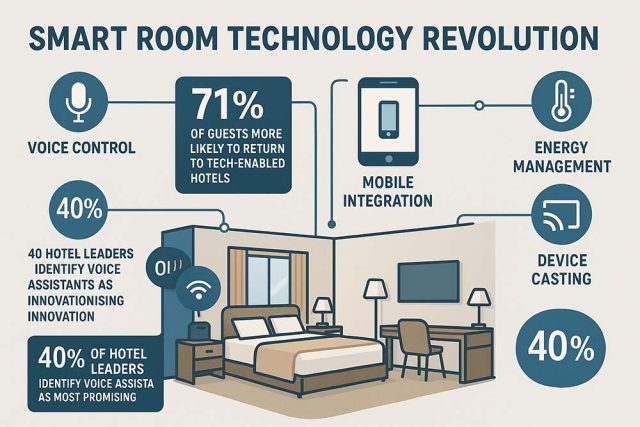
Voice-controlled devices have become integral to modern hotel operations, with 40% of hotel leaders identifying them as the most promising innovation for 2024. These systems enable guests to control room lighting, temperature, and entertainment through natural conversation, request concierge services, and even make restaurant reservations without picking up a phone or using an app.
The impact on guest satisfaction is measurable: according to HT's 2024 Customer Engagement Technology Study, 71% of hotel guests report they're more likely to return to a hotel that provides the technology and security they value. This statistic underscores the direct correlation between technological sophistication and guest loyalty.
The Smart Room Experience
Smart room technology has evolved beyond simple automation to create truly personalized environments. Modern systems can:
Anticipate Guest Preferences: Upon check-in, rooms automatically adjust lighting, temperature, and even entertainment options based on guest profiles and previous stays.
Energy Management Integration: Advanced systems optimize energy consumption through occupancy-based automation, with HVAC systems adjusting automatically when guests are present or away. These energy management systems not only reduce operational costs but also appeal to eco-conscious travelers by showcasing individual energy savings through intelligent dashboards.
Seamless Device Integration: Guests can now cast content from their personal devices to in-room entertainment systems using hotel-grade casting technology, ensuring security while maintaining the comfort of accessing familiar content.
Mobile-First Control: Smartphones are becoming the central control hub for the entire stay experience. The trend toward mobile keys integrated with Apple and Google Wallet is simplifying access, while complete mobile check-in and check-out with digital ID verification reduces front desk dependency.
The Broader Ecosystem Integration
The future of hotel technology lies not just in individual room features but in creating seamless experiences across all hotel facilities. Guests increasingly expect integrated systems that allow them to charge food and beverage purchases, book spa treatments, access fitness facilities, and even pay with loyalty points, all through a single interface.
This integration extends beyond individual properties. Hotel groups are developing cross-property personalization capabilities, allowing guests to enjoy consistent, customized experiences regardless of which location they visit within the brand family.
Ethical Considerations and Responsible AI Implementation
The Privacy Challenge
As hotels collect increasingly sophisticated data to personalize experiences, privacy concerns have moved to the forefront of industry discussions. Every smart device, from voice assistants to occupancy sensors, generates data about guest behavior, preferences, and patterns. This wealth of information, while valuable for service enhancement, raises critical questions about data ownership, storage, and usage.
Modern hotels must navigate complex privacy regulations including GDPR in Europe, CCPA in California, and emerging AI specific legislation worldwide. The challenge lies in balancing personalization with transparency – guests want customized experiences but also demand control over their personal information.
Key Privacy Considerations Include:
- Data Collection Transparency - Hotels must clearly communicate what information is collected, how it's used, and how long it's stored
- Guest Control - Providing guests with meaningful choices about data sharing and the ability to opt-out without sacrificing basic service quality
- Secure Storage and Processing - Implementing enterprise-grade security measures to protect guest data from breaches and unauthorized access
Algorithmic Bias and Fairness
AI systems in hospitality can inadvertently perpetuate or amplify biases present in training data or algorithms. These biases might manifest in several ways:
Pricing Discrimination: AI-driven dynamic pricing systems could potentially charge different rates based on demographic characteristics rather than genuine demand factors, raising questions about fairness and accessibility.
Service Level Variations: Personalization algorithms might provide different service recommendations or attention levels based on perceived guest value, potentially creating discriminatory experiences.
Cultural Insensitivity: AI systems trained primarily on data from specific cultural contexts might fail to appropriately serve international guests or those from underrepresented backgrounds.
Building Ethical AI Frameworks
Leading hospitality companies are developing comprehensive ethical frameworks to guide AI implementation:
Transparency Requirements - Hotels should implement AI-driven personalization models that are transparent, giving guests insight into how recommendations are generated and decisions are made about their experience.
Human Oversight - While AI can process data and make recommendations, critical decisions affecting guest experiences should maintain human oversight to ensure fairness and appropriateness.
Regular Auditing - AI systems require ongoing evaluation to identify and correct biases, ensure accuracy, and maintain alignment with ethical standards and guest expectations.
Staff Training - Employees need education about AI capabilities and limitations, enabling them to identify when AI recommendations might be inappropriate and when human judgment should override algorithmic suggestions.
Data Governance and Accountability
Effective AI ethics in hospitality requires robust data governance structures:
Clear Accountability - Organizations must designate specific roles and responsibilities for AI oversight, ensuring someone is accountable for ethical implications and guest welfare.
Guest Rights Management - Systems should enable guests to easily access their data, understand how it's used, request corrections, or demand deletion in compliance with privacy regulations.
Cross-Border Compliance - International hotel chains must navigate varying privacy laws and cultural expectations about data use across different markets.
Vendor Management - When working with AI technology providers, hotels must ensure their partners meet the same ethical standards and privacy protections.
The Path Forward: Ethical AI Implementation
The goal is not to avoid AI but to implement it responsibly. This means:
- Inclusive Design - Developing AI systems that work effectively for diverse guest populations and avoid perpetuating existing inequalities
- Continuous Monitoring - Regularly assessing AI outcomes for signs of bias or unfairness and making corrections as needed
- Guest Education - Helping guests understand how AI enhances their experience while respecting their right to human interaction when preferred
- Industry Collaboration - Working with industry peers, technology providers, and regulators to establish best practices and standards for ethical AI in hospitality
The hospitality industry's embrace of AI technology comes with the responsibility to use it in ways that respect guest privacy, ensure fairness, and maintain the human-centered values that define exceptional service. Success lies not just in technological sophistication but in the ethical framework that guides its implementation.
Achieving the Perfect Balance
Strategic AI Implementation
Leading hotels are adopting hybrid approaches that maximize AI's strengths while preserving essential human involvement. This means deploying AI for tasks that benefit from consistency, speed, and data processing while ensuring human staff handle interactions requiring emotional intelligence, creativity, and cultural sensitivity.
Successful implementation typically follows a measured approach: AI handles routine inquiries, processes standard requests, and manages predictable interactions, while human staff focus on complex problem-solving, relationship building, and creating memorable experiences that drive loyalty.
Financial Realities and ROI
Hotels implementing AI strategically typically see return on investment within reasonable timeframes, depending on implementation scope and property size. The key lies in starting with targeted applications rather than attempting comprehensive transformation immediately.
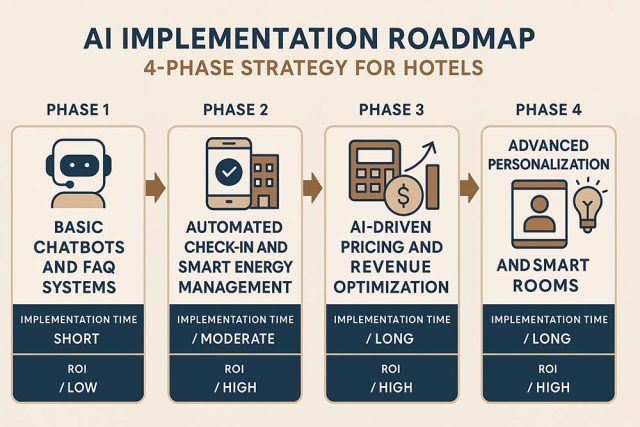
A practical rollout timeline might include:
- Phase 1 - Basic chatbots for website inquiries and FAQ responses
- Phase 2 - Automated check-in systems and smart energy management
- Phase 3: AI-driven pricing optimization and revenue management tools
- Phase 4 - Advanced personalization features and smart room technologies
This graduated approach allows staff to adapt gradually while demonstrating clear value at each stage.
Staff Development and Training
Successfully integrating AI requires comprehensive staff training that goes beyond technical instruction. Employees need to understand when to rely on AI insights, when to override system recommendations, and how to add personal touches that enhance rather than compete with technology.
Modern hotel staff increasingly function as "AI-augmented" service providers, using technology to access guest preferences instantly, predict needs based on data patterns, and deliver more informed, personalized service than ever before. The goal is creating teams where human intuition and emotional intelligence are enhanced by AI-generated insights.
Learning from Industry Pioneers
The Henn na Hotel Experience
Japan's Henn na Hotel chain provides valuable lessons about AI implementation boundaries. Initially featuring humanoid robots for check-in and concierge services, the hotels aimed to reduce labor costs while offering innovative experiences that would attract tech-curious travelers.
While the robots successfully handled routine transactions and generated significant media attention, guest reactions revealed important limitations. Some visitors found the robotic interactions charming and efficient, while others expressed discomfort with the lack of human warmth during their stay. The most successful locations learned to balance robotic efficiency with human oversight, ensuring guests could access personal assistance when desired while benefiting from technological conveniences.
Float Wellness Spa Innovation
Float Wellness Spa in San Antonio demonstrates successful complementary AI implementation through their AI-powered robotic massage system. The technology uses advanced sensors to deliver customized massage experiences with precise pressure control and consistent technique, attracting guests interested in innovative wellness approaches.
However, human therapists remain central to the spa's offerings, providing the intuitive care, emotional connection, and personalized attention that define exceptional wellness experiences. This dual approach shows how AI can expand service offerings while human professionals continue delivering the empathetic, relationship-based care that creates lasting guest satisfaction.
Emerging Trends Shaping Tomorrow's Hotels
Predictive Service Delivery
Forward-thinking properties are moving beyond reactive service toward predictive hospitality. AI systems now analyze guest behavior patterns, seasonal trends, and external factors to anticipate needs before guests express them. This might involve pre-adjusting room temperatures based on arrival patterns, preparing personalized welcome amenities before check-in, or optimizing restaurant staffing based on predicted demand.
The goal is creating seamless experiences where service appears effortless and perfectly timed, though the challenge lies in balancing anticipation with privacy concerns and avoiding assumptions that might feel intrusive.
Global Accessibility Through Translation
International hotels are implementing real-time translation features across digital interfaces and even in-person interactions through mobile applications. This technology helps break down language barriers for basic communication while human staff focus on non-verbal communication, cultural sensitivity, and emotional connection that require human understanding.
Sustainability Through Intelligence
AI is becoming crucial for environmental responsibility, with smart energy management systems helping hotels optimize consumption while maintaining guest comfort. These systems learn from occupancy patterns, weather conditions, and guest preferences to optimize heating, cooling, and lighting automatically.
Water conservation, waste reduction, and resource optimization are increasingly managed through AI analytics that identify efficiency opportunities human managers might miss, contributing to both environmental goals and operational cost reduction.
The Path Forward: Partnership, Not Replacement
Looking ahead, the future of hospitality clearly lies in thoughtful integration rather than wholesale replacement. AI technology will continue evolving, offering increasingly sophisticated tools for personalization, efficiency, and guest service enhancement. Developments in natural language processing, emotional recognition, and predictive analytics will make AI systems more nuanced and responsive.
However, the fundamental human elements of hospitality, genuine warmth, empathetic problem-solving, cultural sensitivity, creative thinking, and the ability to create emotional connections, will remain irreplaceable. The most successful hotels will be those that use AI to free their human staff to focus on these uniquely human capabilities while leveraging technology for tasks where consistency, speed, and data processing provide clear advantages.
This evolution suggests a future where AI handles routine and predictable aspects of hospitality while human staff concentrate on exceptional and unexpected moments that create lasting memories. Rather than diminishing the role of human service, AI has the potential to elevate it by removing routine burdens and providing staff with deeper insights into guest preferences and needs.
The hotels that thrive will be those that view AI as a powerful amplifier of human capability rather than a replacement for human connection. They will create environments where technology and humanity complement each other, where data-driven insights inform but don't override intuitive service, and where efficiency gains enable rather than eliminate the personal touches that transform stays into memories.
Conclusion: The Smile Remains Supreme
Can AI really replace the human smile? The evidence from hotels worldwide provides a clear answer: while AI offers transformative capabilities that are reshaping hospitality operations, it cannot and should not replace the human elements that define genuine hospitality.
The path forward requires strategic thinking about where AI adds the most value and where human interaction remains essential. Success lies in leveraging AI for efficiency, consistency, and data-driven insights while preserving human involvement in emotional, complex, and relationship-building aspects of service.
The winners in this new landscape will be hospitality leaders who view AI not as a replacement for human service but as a powerful tool that enhances their team's ability to deliver exceptional, personalized experiences. These properties will set new standards in guest satisfaction, operational efficiency, and sustainable profitability.
The human smile, with all its warmth, authenticity, and emotional resonance, remains irreplaceable. The future of hospitality lies in using AI to ensure that smile is better informed, more personalized, and available exactly when guests need it most. In this partnership between human intuition and artificial intelligence, the industry will find its next chapter of growth and guest satisfaction.
As the industry navigates this technological transformation, the challenge lies not in choosing between human service and AI capabilities, but in creating a harmonious integration that amplifies the best of both. Hotels that master this balance, combining AI's efficiency and insights with human warmth and creativity, will define the future of exceptional hospitality experiences.